Before leaving home, even to do his laundry at a nearby laundromat, Gustavo Dominguez says a prayer. He asks God to let him return home safely.
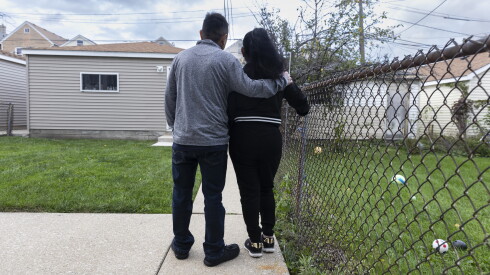
It was evening as Dominguez, 49, and his wife Patricia Dávila, 67, loaded their laundry bags into the trunk of their car and headed out. Dominguez does not have legal status. His wife has work authorization and says she sought asylum after fleeing threats in Mexico.
They now wait until nighttime to do their laundry and to buy their groceries. They’re afraid of encountering Immigration and Customs Enforcement agents during the day.
At the laundromat, Dominguez hurriedly unloads the bags of laundry. Dávila helps, talking as she works. Dávila has noticed a lot more people now come to do their laundry at night.
“You’ll see — [ even] more people start arriving later,” she says in Spanish.
Once the wash is in, the couple leaves to buy groceries at a nearby supermarket as darkness settles over the neighborhood.
Inside, piñatas hang overhead. Giant tamale pots line a high shelf alongside coolers. Each pushes a cart, covering different parts of the store to finish the shopping faster.
Dávila says she often sees young people on video calls with their mothers, holding up products and asking which brand to buy.
There is "so much fear that they send the kids to do the shopping,” she says.
Nearly a year after Operation Midway Blitz officially ended, immigrants in Chicago are still changing their work schedules and fitting everyday errands into the hours after dark or before dawn out of fear they’ll be arrested or detained by ICE. Workers described buying vending supplies before sunrise, working at night, shopping at night and cutting back on trips outside their homes. Some still work during the day because their livelihoods depend on it, but change their hours when they can. The shift has meant lost income, and the constant anxiety continues to take a toll on mental health and relationships.
From the beginning of 2026 through the first week of August, ICE made 1,560 arrests in Cook County, according to a Chicago Sun-Times/WBEZ analysis of ICE arrest data obtained by the Deportation Data Project. Legal and community groups have documented encounters at courthouses, schools and grocery stores, saying operations have become less publicized but continue to happen as part of the Trump administration's ongoing mass deportation campaign.
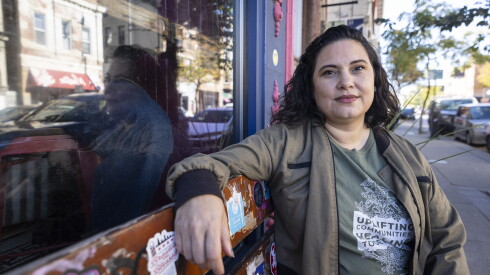
“We’re becoming gente de la noche" — [people of the night], says Baltazar Enriquez, president of the Little Village Community Council. “We do things at night now.”
Enriquez says he knows many immigrants who have taken the night shift as a way to try to avoid encounters with ICE. One mother told him she struggles to sleep after working nights. She still has to get her children ready in the morning after she gets home. He recalled her describing stretches of only two or three hours of rest, catching naps when she could.
“I’m getting dark circles under my eyes,” he says she told him.
Rosemary Magaña, a therapist and program director at the Coalition for Immigrant Mental Health, says nighttime routines can cost people social connections that help them cope. Visits, weekend outings and gatherings fall away.
Magaña has felt the vigilance herself. During the early days of Midway Blitz, she would return from driving her son to school, from watching cars and imagining what she would do if agents stopped them. Once, she says, her neck became so stiff she could not move it.
Dávila says their new nighttime routines began after they saw immigration agents detain people near their home. During one incident last fall, agents passed close to their windows as a girl on a skateboard warned residents not to come outside. Agents knocked her off the board, according to Dominguez, who says she heard loud bangs and that tear gas canisters landed behind their home and in front of a neighbor’s house.
Dominguez covered the windows with blankets. They locked the doors and turned off the lights. He feared agents would come inside. Through September and part of October 2025, they tried to stay inside. For about a month, a friend with legal status drove Patricia to do laundry and buy groceries. Gustavo continued going to work, but stopped driving himself.
During those early months of Midway Blitz, he paid for Uber rides to work, sometimes lying down in the back. Dominguez works in a warehouse and loads trucks. When his shift ended, he waited hours for a co-worker to take him home. A second Uber cost too much.
He grew anxious and lost weight, maybe 10 to 20 pounds Patricia says. She worries about him.
Dávila fled death threats in Mexico after reporting sexual abuse of girls and helping people flee violence. In 2010, two of her nephews were killed in a student massacre. Now, she fears staying in Chicago and returning to Mexico.
“I’m caught in [between] the crossfire,” she says.
Still, she credits her involvement in community organizations with helping her find some sense of protection when things get overwhelming.
But she sees her husband struggling more with the fear, still anxious and angry about what they witnessed last fall.
Gustavo has a U.S. sports team shirt he can no longer bring himself to wear.
“The admiration I felt for this country has turned into contempt,” he says in Spanish.
He speaks about seeing parents being mistreated by agents in front of their children, about the pain children might carry long after an arrest.
“You’re their hero, and they treat you like that?” he says. “But what they want is to strip you of your dignity.”
Aside from the anxiety, there are also financial pressures. The couple has put aside enough money for about two months of rent in case one of them is detained.
They used to go to the mall for clothes and other things they needed, Patricia says. Now, she orders more online, buying clothes through the online site Shein and household and personal items through Amazon. Shopping this way can cost more, she says. She misses finding deals in person.
At Cook County Health, psychiatrist Dr. Hugo Solari hears daily from patients living in fear of ICE.
“Every day in practice, I hear patients discussing how they had to adapt their lives in order to avoid encountering ICE,” Solari says.
Some request telehealth appointments or prescriptions by mail. Others postpone preventive care because they fear leaving home.
The stress also interrupts their sleep. Anxiety makes sleep difficult, and lost sleep deepens the anxiety. For patients moving activities into nighttime, getting enough regular sleep can become harder still. Over time, Solari says, the chronic stress and disrupted sleep can affect physical as well as mental health.
Imelda, a childcare worker who doesn’t have legal status, now only takes evening babysitting jobs. Imelda is a pseudonym. The Sun-Times is not using her real name because she fears deportation.
She takes great pride in her work, helping teach children how to treat others. She especially enjoys caring for children up to age 3.
“I like to plant empathy in them, respect for all people,” she says in Spanish.
When immigration operations began last fall, Imelda was caring for a young girl as a nanny. She still took her to museums, parks and the library, watching for agents as she went. Nannies and babysitters called one another to share warnings about agents near the parks and libraries where they took children, urging co-workers to avoid those areas and take care.
But at work, Imelda tried to keep her fear from showing.
“Even with my whole body trembling, I had to be professional at work,” she says.
Imelda told the girl’s mother how frightened she felt. Her employer changed her work arrangement. The family also offered to shelter Imelda and her family in their home. The offer made her feel that they valued her work and cared about her.
It reminded her of Anne Frank.
That job ended when the girl started school. Now, Imelda takes occasional evening babysitting jobs helping children through meals, showers, books and bedtime. The work keeps her indoors, but she works only about twice a month.
Imelda had thought of herself as someone others could turn to. Through her volunteer work in workers’ rights, she represents people and speaks up for them. Among fellow workers, she is the one who sings, dances and tries to help everyone relax. But lately, she is surprised by her own fear, by how difficult it has become to leave home.
But even staying home doesn’t quiet the fear.
Footsteps upstairs make her think agents have entered the building. She imagines someone letting them in. She considers where she could hide. Outside, she studies passing vehicles for signs they might belong to immigration agents.
Magaña, the therapist, says prolonged anxiety can change what people expect from the world. They anticipate danger and doubt that circumstances will improve. She describes it as systemic trauma, reaching beyond those directly detained.
“It doesn’t have to happen to you for it to traumatize you,” she says.
Imelda tries to stay strong for her children and reassure them that nothing will happen. But they are afraid, too, she says. Trips to the park and time playing outside have become less frequent. She worries about children taking on concerns about food and rent when they should be able to focus on their studies.
“All of this is going to leave lasting effects,” she says.
Guillermo Flores, 54, was among the first to arrive at the street vendors association’s monthly meeting. He took a seat as other vendors trickled in.
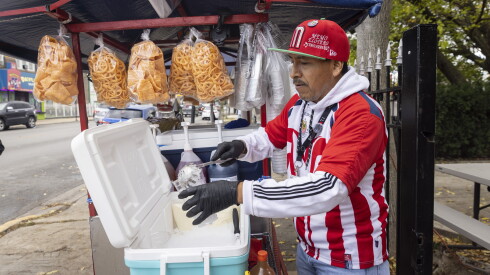
Flores has sold food from a small pushcart for about 16 years. He prepares cups of mango, watermelon, pineapple and cucumber before heading out with raspados, chips and chicharrones.
He has a vending license and pays taxes, he says. He has held a driver’s license for more than 14 years without an accident or having it revoked.
“I’m trying to do everything correctly,” he says in Spanish.
Still, reports of immigration enforcement in his neighborhood often keep him from selling. He stays home for a day, then sometimes another, losing income.
Avoiding daytime work altogether would mean giving up the business he has spent years building. Instead, he changes the parts of his day he can. He used to buy supplies around 7 a.m. Now, he shops at 5, before sunrise, hoping to avoid an encounter. He continues selling during the day but for fewer hours.
Some vendors prefer to work near one another so they can help and exchange warnings, he says. Where he sells, there is only one other vendor nearby.
For Flores, moving his selling hours into the night would bring a different risk. He fears robbery and avoids staying out after dark.
“We have to protect ourselves from ICE, and we also have to protect ourselves from robberies,” he says.
When he sees it getting dark, he leaves.
“I say thanks to God and whatever sold, sold, and let’s go,” he says.
Magaña hears especially from women who care for everyone else while keeping their own distress from showing. They worry that appearing frightened will frighten their children, too.
“You can cry and struggle and also help others,” she says.
Support begins with being believed, Magaña adds.
“Find spaces that do believe you, validate you and normalize your stress,” she says. “That don’t call you paranoid.”
A weekly therapy appointment isn’t always enough. She spoke about cooking together, sharing food and finding people who listen without dismissing the danger. The coalition offers free virtual support circles for immigrants and those supporting them.
“I’m here to support you in whatever is going to work best for you," she says.
Back at the grocery store, Patricia and Gustavo find a shorter checkout line and quickly join it. Their clothes are still at the laundromat. They have to return and dry them before they can go home.
For those errands, they go together. But work takes them in separate directions.
At work, Patricia cleans hotel rooms while waiting for Gustavo’s text confirming he has reached his warehouse job at 10 a.m. If his message does not come around the usual time, he told her, she should understand that he has been taken.
He rarely used to text. Now, Patricia has saved a year of his daily messages:
“I’ve arrived.”
Contributing: Keenan Chen